
Northern Albania
Northern Albania offers everything you could wish for an active holiday: there are plenty of opportunities for hiking and trekking, as well as mountain biking (if you are fit) – because the mountains are steep. You will be rewarded with impressive landscapes and viewpoints, rare plants and impressive wildlife. You can recover from your exertions on sandy beaches and lagoons on the Adriatic coast, and the delicious Albanian cuisine will provide you new energy while travelling.
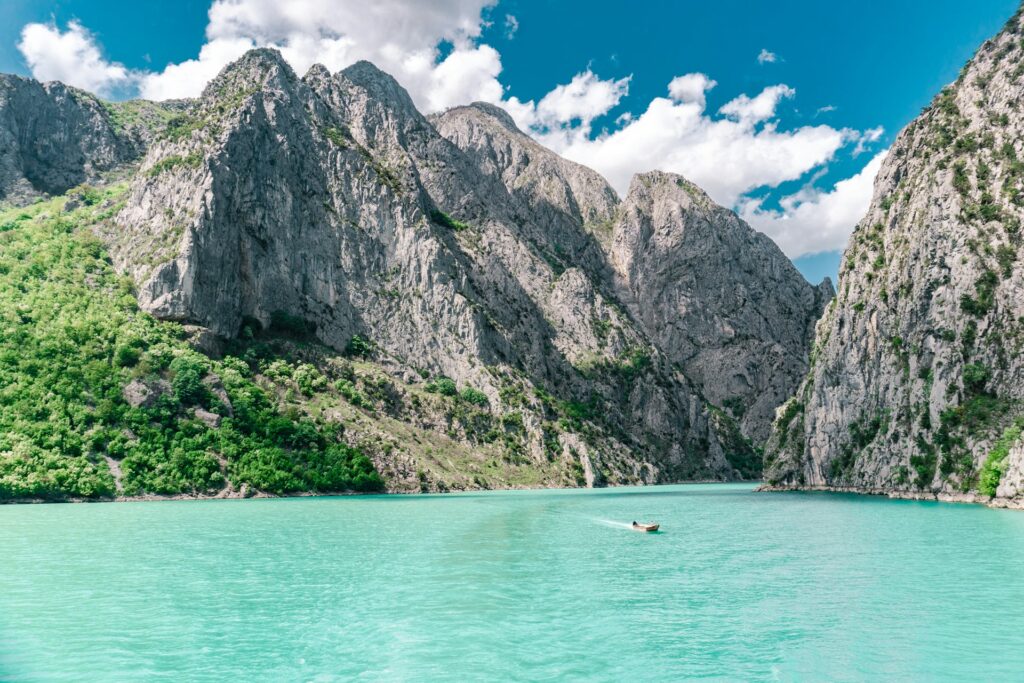
Table Of Contents
Lake Skadar between Montenegro & Albania
Lake Skadar and the city of Shkodër are the starting point for many hikers into the ‘Malësia e Madhe’, the Albanian high mountains. But Lake Skadar itself is also worth a visit. If you want to watch birds, its shores are the right place for you: 270 species of birds have been counted here, including pelicans, cormorants, herons, spoonbills, wild pigeons and rare species like the whiskered tern.

In Shkodër itself, you can find a historical museum, various places of worship (two mosques, a Catholic cathedral and an Orthodox church), a collection of photos of Shkodër and Albania since 1858 (the “Marubi” National Museum of Photography), an art gallery and Rozafa Castle. The castle is not to be missed; the view alone is worth it. In the centre of Shkodër, you can find many streets and squares with nice cafés, but the outskirts are also worth seeing.
Rozafa Castle
On the southern shore of Lake Skadar are the villages of Shirokë and Zogai. The region was already appreciated for its location between the bright blue lake and the green forests, between blossoming fruit trees and wild flowers, hundreds of years ago. In spring, in addition to olive, plum, mulberry, fig and chestnut trees, pomegranate trees also bloom here, transforming the landscape into a colourful sea of flowers. Both Shirokë and Zogai still have many old houses built in the traditional stone construction style. In addition to fruit-growing, the inhabitants live mainly from fishing, and some restaurants on the lakeshore serve delicious fish dishes. In Zogai, colourful wool carpets are also woven.
The Adriatic coast: Sandy beaches and lagoons
From here it is only a short distance to the south to reach the Adriatic Sea. The small town of Velipojë is located in the middle of the nature reserve of the same name, on a 13-kilometre-long sandy beach. The town consists of picturesque small houses with vegetable gardens, and you can also see cows, sheep and donkey carts here. The wildlife reserve around the lagoon, on the other hand, is home to wild boar, hares, pheasants and wild ducks. There is plenty of accommodation, including quiet and secluded places.
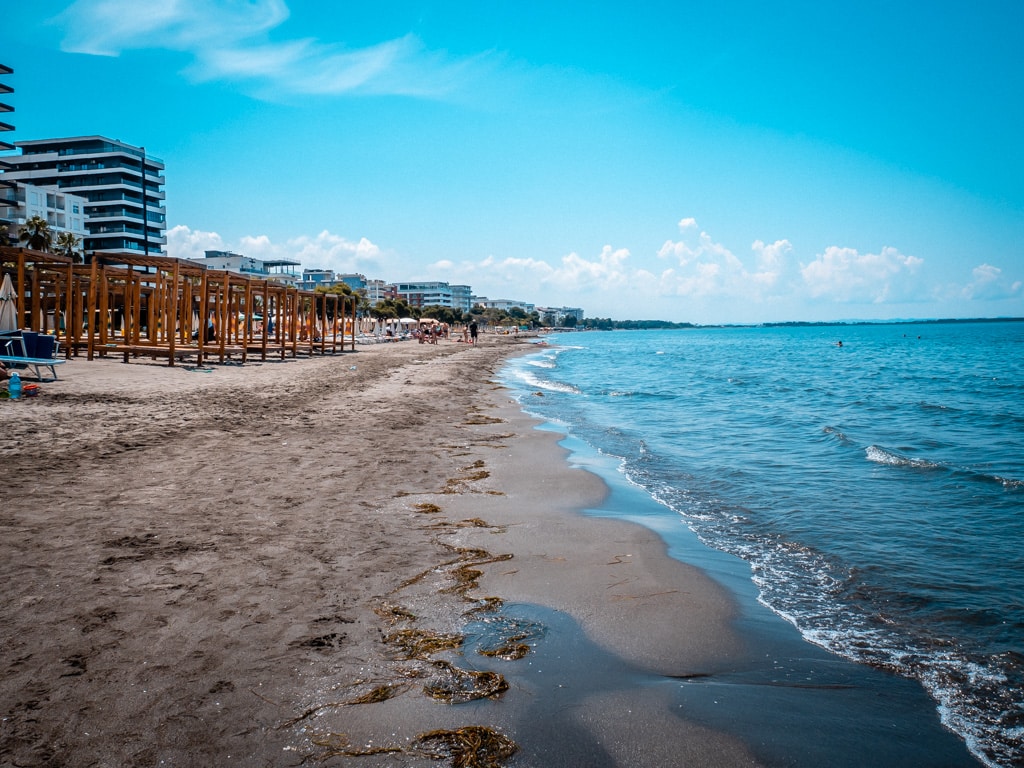
If you move south along the Adriatic coast from here, you will reach the port city of Shengjin. The Romans used this harbour; today ferries from Bari, Italy, land here. There is also a beautiful sandy beach here, but the water near the harbour is not quite as clean as elsewhere. South of Shengjin are several lagoons that have been designated a nature reserve, Kune-Vaini. Numerous bird species live here, including pheasants and pelicans.
Drisht & Mesi Bridge

Northwest of Shkodër lies Drisht. The Mesi Bridge, Ura e Mesit, is worth seeing here. It was built in the 18th century, probably on the remains of an even older bridge. The Mesi Bridge is 108 metres long and 18 metres high. It has thirteen arches. The art of bridge building was highly developed in this area because the roads often have to cross rivers and gorges.
There was already a settlement in Drisht in ancient times. In Mes, on a hill in the area, you can still see the remains of an Illyrian castle from the period between about 400 and 200 BC.
From Shkodër to the Albanian Alps
From Shkodër, it is about 50 kilometres north to Bogë, and from there on to Theth. There is significantly less tourist infrastructure here than in Shkodër, on Lake Skadar or on the Adriatic coast. Minibuses run as far as Bogë, and you can also find ridesharing opportunities. In many villages, families offer private accommodation.
Bogë
Bogë; is a glacial valley in the form of an amphitheatre, surrounded by 2000-metre-high mountains. The breathtaking beauty of the valley was already appreciated in ancient times. Around Bogë there are interesting limestone caves and many rare plants and animals, including wild cats, chamois, wild boar, wolves and, high in the mountains, eagles.
Theth

You can reach Theth via an adventurous mountain pass that offers views of deep valleys and rugged mountain slopes. There is also a cave in Theth, the ‘Bira e Rrathëve’, with underground lakes, stalagmites, and stalactites. You can also take a walk to the Thethi waterfall or a hike along the Shala River.
Hiking in the Albanian Alps
Hiking between Valbona and Theth is one of the most popular activities in northern Albania. As part of the six-day Peaks of the Balkans trek, the route passes through primeval forests, along dry riverbeds and breathtaking views.
Valbona Valley
The small town of Valbona is located in the Valbona Valley National Park, an 8,000-hectare alpine wonderland about half an hour northeast of Bajram Curri. Valbona Valley is a popular destination for hikers and nature lovers, as its towering mountains rival those of the Alps in Western Europe. The peaks in northern Albania would certainly not look out of place in Switzerland or Austria.
The Valbona – Theth Hike
The route from Valbona to Theth was once an old mule track that crossed the heart of the Accursed Mountains. There are still no roads between the two places, so the hiking trail is the only connection between the two most popular mountain villages in the country.

The hike from Valbona to Theth is a full-day affair, taking 6-10 hours depending on your pace, starting point and number of stops. The first part of the hike follows the main paved road through Valbona. The tarmacked road ends at Llomi. Many hikers choose to start their trek here, but some also rent off-road vehicles to take them across the relatively flat riverbed to Rragam.
After a flat hike along a riverbed dotted with giant boulders, the path climbs through the alpine forest before opening up into spectacular panoramic views of the valley behind. Along the way, three cafés offer light refreshments and fresh spring water.

From the summit of the hike, the 360-degree view of the Valbona and Theth valleys is simply breathtaking.
Discover These Tours & Offers


Theth Albania
After a short break at the top of the mountain, I continued down to the picturesque village of Theth. The forest grew denser as I approached the Theth Valley, enveloping the stone massifs in a green blanket. Surrounded by towering mountains and accessible only by a hiking trail, the small mountain village of Theth is an idyllic spot for nature lovers.

If I hadn’t planned to travel on the next morning, I would have liked to have spent a few more days in the breathtaking surroundings of Theth.

Hi. I’m Dirk, adventure traveller, originally from Germany. In 2020, Adventure Albania, started as an Albania travel blog. A few months later, I founded a small travel agency to complement my recommendations with some of the best experiences that I found, organized by local partners and friends.
I have meanwhile moved to Albania and am now based in Tirana. I continue exploring new corners of Albania and the balkans and regularly update my blog with the latest in travel and experiences. If you are visiting Albania as a digital Nomad, check out my coliving project "Nomad Island Tirana".

I only make genuine, worthwhile recommendations based on my experience, expertise, & research. If you buy through my links, I may get a commission, supporting this website at no extra cost to you.
 English
  Français
  Italiano
  Polski
  Nederlands
  Svenska
  Español
  עִבְרִית