
Albania Travel Tips: 20 Things to Know Before You Go
My Guide for your Albania Holiday
In this post, you will find all the information you need for your trip to Albania. Explore the ‘Land of the Eagles’ with its vast mountain ridges, rugged cliffs, enchanting forests, lush green meadows and medieval fortresses. If you prefer to swim, you can relax on the sandy beaches of Golem and Durrës. A visit to the colourful capital, Tirana, is a must for all holidaymakers. Here you can get to know the typical Albanian local lifestyle.
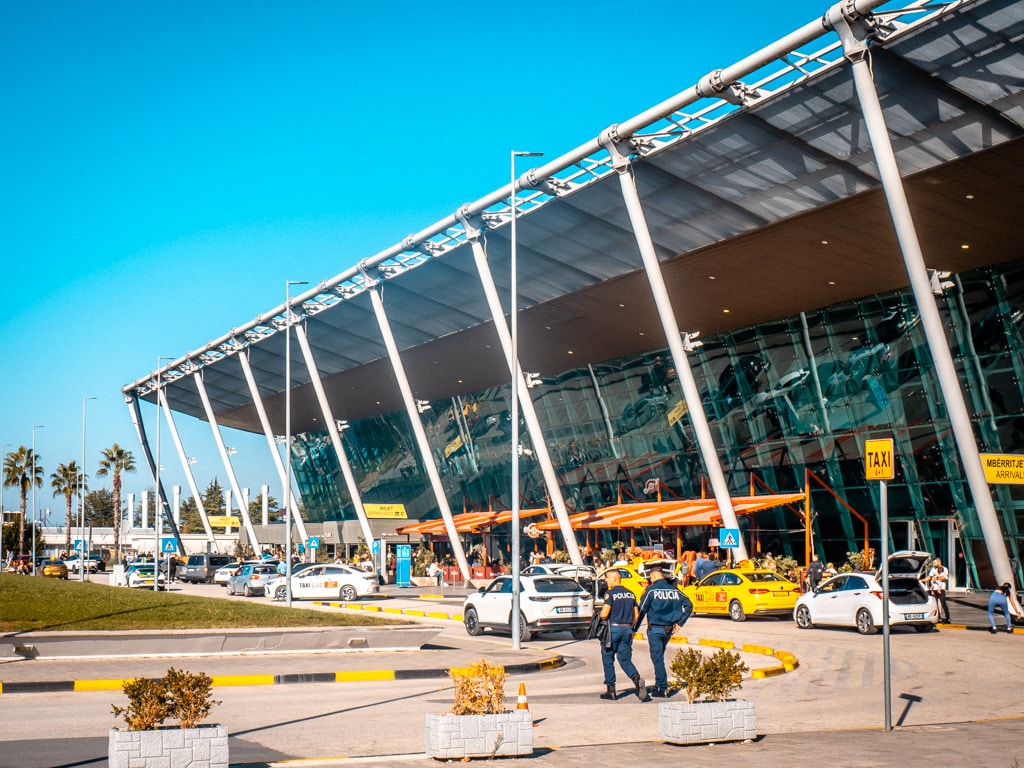
Table Of Contents
Key Facts about Albania
- About half of Albania’s land mass is mountainous, with altitudes of over 600 metres. In the north of the country you can find the Albanian Alps. The highest mountain here is over 2,700 metres high.
- Culture pure: the second largest Roman amphitheatre in the Balkans is located in the port city of Durrës in Albania. A total of about 20,000 spectators could be seated here.
- Tirana International Airport Nёnё Tereza is named after the famous Nobel Peace Prize winner Mother Teresa, who was Albanian.
- On average, the population of Albania is almost 7 years younger than the German population. This makes Albania one of the youngest countries in Europe.
- Did you know that in Albania, nodding is a sign of refusal and shaking the head is a sign of consent? You should definitely keep this difference in mind when communicating with Albanians.
Fact sheet
What do you need to know about Albania?
- Geography: Albania borders Montenegro to the northwest, Kosovo to the north, North Macedonia to the northeast, Greece to the southeast and south, the Ionian Sea to the southwest, and the Adriatic Sea to the west.
- Capital: Tirana
- Origin of the name: Albania either goes back to the pre-Celtic word alb (hill) or to the Indo-European word albh (white). This name could refer to the limestone of the Dinaric Alps or to the clear water of the rivers.
- Form of government: Parliamentary Republic
- International dialling code: +355
- Currency & means of payment: The national currency of Albania is the Lek. Banknotes are available in denominations of 5,000, 2,000, 1,000, 500, 200 Lek. Coins in the amounts 1, 5, 10, 20, 50 and 100 Lek. In addition to the official currency, the Euro is often accepted as a means of payment.
- Time zone: UTC +1 and UTC +2
What is the climate and weather like in Albania?
The average annual temperature in the capital, Tirana, is between 15 °C and 17 °C in Durrës. Albania has a Mediterranean climate with fluctuating temperatures. In the summer months from June to October, temperatures rise to up to 32 °C. In the winter months from November to March, temperatures drop to below 15°C, and at night they can even fall to 5°C.
When is the best time to travel?
The best months for a beach holiday in Albania are June to September. Just bear in mind that it can get very hot in July and August and the beaches are very busy. For a round trip or a hiking holiday, spring or autumn are better months.
Which cities in Albania are worth exploring?
Tirana – The Capital City
The capital city of Tirana lies at the foot of the wild green mount Dajti. In the heart of the city, you can take a stroll along the boulevard ‘Deshmoret e Kombit’. The buildings that line the boulevard are symbolic of the economic boom and western orientation of Albania. Follow the boulevard to Skanderbeg Square, where the national hero is honoured with a huge equestrian statue.

The equestrian statue of the national hero Gjergi Kastrioti Scanderbeg is 11 metres high. The Et’hem Bey Mosque is located directly on Skanderbeg Square and is one of the oldest mosques in the city. The Clock Tower, the National Museum and the Pyramid will tell you more about the eventful history of Tirana.
Continue Reading: Where to Stay in Tirana
Tip: You can take also a cable car up to the local mountain, Dajti. Close to the starting point you can also find the BunkArt Museum. I recommend combining the two attractions.
Berat – The city of 1000 windows
Berat is the oldest city in Albania, is situated on the river Osum and is also known as the city of 1,000 windows. It is located about 100 kilometres south of Tirana and was officially designated a museum city in 1961. It has been a UNESCO World Heritage Site since 2008. The white medieval houses and the proud fortress characterise the cityscape, which is why new buildings are prohibited in three districts.

We recommend visiting the castle of Berat, a huge and still inhabited fortress that towers over the city. From here you have a unique view of the city and the mountains. During a visit to the national icon museum Onufri, you can marvel at over 150 objects. These were selected from a find of 1,500 objects and belonged to the Albanian churches and monasteries.
Durrës
The port city of Durrës is located on a 10-kilometre-long sandy beach about 40 kilometres west of Tirana. The old town is home to the only ancient amphitheatre in Albania. It is the emblem of Durrës and the fascinating mosaic in the amphitheatre’s chapel is particularly worth seeing.

There is not much left of the Venetian fortress, but it is still well worth seeing. There is a small public garden within the city walls of Durrës. Be enchanted by the unique flair and charm of the city.
Gjirokaster – UNESCO World Heritage in The city of stone
Gjirokaster is one of the most important cities in southern Albania and is situated on a mountainside. Today, around 20,000 people live here and the historic centre was declared a UNESCO World Heritage Site in 2005. Take a stroll through the narrow, winding streets that are characteristic of this city. Visit the castle above the city, where you will have the most beautiful view of the surrounding landscape.

A trip to the ancient archaeological site of Antigonea in Gjirokaster is definitely worthwhile. There you can experience traditional polyphonic music with live music. On a guided tour of Gjirokaster, the ‘city of stones’, you can marvel at the striking stone houses, artisan shops, Skenduli House and the house of the famous writer Ismail Kadare.
Tip: Visit the old bazaar in the evening, haggle and then enjoy a delicious dinner in one of the city’s many restaurants.
Kruja – Meet the national hero Skanderbeg
Kruja is a small town of historical significance in central Albania. A narrow road winds steadily up the rugged mountain. The silhouette of the massive walls of the medieval fortress of national hero Skanderbeg can be seen from afar. The ethnographic museum provides an insight into traditional life. A narrow staircase leads to the interior of the old residential building. In every corner of the living quarters, you can marvel at the clothes, beds, pots and tools of the former inhabitants.

In the historic bazaar, the oriental influence of the Ottomans can still be felt today. The bazaar mosque dates from the 16th century and was thoroughly restored after the end of communism; the cultural monument was used as a warehouse.
Saranda
Saranda is situated in a beautiful bay between rugged rocks and the bright blue Ionian Sea. Take a walk along the beautiful promenade and breathe in the fresh sea air as you pass through oak and plane tree groves to the Blue Eye Sarande. The water emerges at high pressure from a spring in the centre. The turquoise water at the edge and the dark blue core give the source its name. The water shoots from an as yet unexplained depth to the earth’s surface and never gets warmer than 12.5 °C.

We recommend that you take off your shoes and enjoy the cool water for a while. In the city centre are the remains of a synagogue from the 5th century, which later served as an early Christian basilica. The elaborate mosaic floors can still be seen today. On a hill above the city is the castle ‘Kalaja e Lëkurësit’ from the 16th century.
Vlora
The city of Vlora is one of the most important ports in Albania. Here, the Adriatic Sea separates Albania and Italy by only about 60 km. Despite its proximity to Italy, the port is not very large. In the 1990s, the city of Vlora was a starting point for travelling to Western Europe. In the city centre, most of the attractions and museums are located around the Flag Square. Here you will also find the Independence Monument and the tomb of the founder of the state, Ismail Qemali, with a statue. Vlora is also a popular seaside resort with a well-kept beach and many leisure activities.

Tip: There are bars and restaurants near the beach that invite you to linger and provide you with cool drinks and Albanian dishes during a break from swimming.
The historic city of Butrint
The historic city of Butrint is located in the south of Albania on a peninsula between Lake Butrint and the Vivar Channel. It is best known for the numerous ruins from Roman times, which is why the city is also called the ‘ruined city of Albania’. Butrint has been a UNESCO World Heritage Site since 1992 and delights numerous visitors with its Acropolis, amphitheatre and baptistery, among other things. The well-preserved mosaic floor is particularly eye-catching.

Tip: At the western end of the Acropolis stands the Venetian castle tower. From here you can enjoy a great view of the Vivar Canal and the Strait of Corfu.
Natural Highlights in Albania
Albania not only boasts beautiful cities, but also breathtaking natural landscapes and an impressive variety of flora and fauna. The small Balkan country has 15 national parks. Hikers and nature lovers will find everything their hearts desire in the unspoilt countryside. See for yourself what natural highlights you can experience during your trip.
Lake Koman
The Koman reservoir is an artificial reservoir on the Drin River in northern Albania, created in the 1980s. Surrounded by lush green slopes in the Albanian Alps, it extends over a length of 34 km, is 50 m wide at its narrowest point and up to 96 m deep. The water has been dammed since the 1980s to provide the north with a power supply. You can cross the Koman reservoir by ferry. The Berisha ferry travels back and forth between the towns of Koman and Fierza for about two hours each way. On the journey across the Koman reservoir, you will see headlands with small houses and settlements with their own moorings.

Albanian Alps – Hiking in unspoilt nature
In the Albanian Alps, nature lovers will find everything their hearts desire: unspoilt nature, dreamlike mountain worlds with high peaks, deep valleys, small, charming villages, flocks of sheep and very hospitable people. Thanks to the tourist boom in recent years, the infrastructure has improved a lot. The Albanian Alps are located in the border area of Albania, Kosovo and Montenegro. The road network is only developed on the outskirts, but not to European standards. The roads are rather unsurfaced. The highest peak of the Albanian Alps is the Jezerca (2,694 m) and is located northeast of Theth in the centre of the Alps. The second highest point is in western Kosovo and is the Gjeravica.

Syri i Kaltër – The ‘Blue Eye’ of Albania
The water emerges from a spring at a high pressure; the exact depth has not yet been determined. The water has a temperature of about 12.5 °C and a deep blue colour in the sunlight, which also gives the underground source of a mountain lake the name ‘Blue Eye’. In the immediate vicinity, there are mainly oak and plane tree groves, which are under nature protection. From a small viewing platform, you can see the source best, directly into the ‘Blue Eye’. Let yourself be enchanted by these colours and then enjoy a meal in the nearby restaurant. The Syri l Kalter can be reached in half an hour by car from Saranda. The source is well signposted everywhere and 200 Lek (about 2.00 €) per person are requested at the barrier.

What language is spoken in Albania?
Albanian is spoken in Albania, but also in North Macedonia and Kosovo. The second official language is Greek. We have summarised some vocabulary for you that may help you when travelling to Albania. However, you can also make yourself understood in English in Albania.
English – Albanian
Hello/Bye = Përshëndetje / Mirupafshim
Good day/evening = Mirëdita / Mirëmbrëma
Yes/no = Po / jo
Thank you/you’re welcome = Faleminderit / Ju lutem
Excuse me = Na falni
My name is… = Unë quhem…
I understand/I don’t understand = Unë e kuptoj / unë nuk kuptoj
How much does…? = Sa kushton kjo?
The bill, please! = Faturë, ju lutem!
I don’t speak Albanian. = Unë nuk flas shqip.
Important events in Albanian history
- After the death of the Prince of Kruja, in the Turkish defence war of the 15th century, Albania was part of the Ottoman Empire for more than 400 years. During this time, most Albanians converted to Islam.
- After the Balkan War in 1912, the Albanians regained their independence.
- In 1967, a total ban on religion was declared. This ban was in force until 1990. Churches and mosques were destroyed or used for other purposes, and place and personal names with religious origins were also changed.
- The Kosovo War began on 28 February 1998 and ended on 10 June 1999, the day an agreement was reached in military negotiations.
- Since 2014, Albania has been an official candidate for EU accession.
Cultural aspects about Albania
Traditional Clothing
The most well-known item of clothing for men is the fustanella (a pleated skirt). This can also be found in Greek traditional costumes. The most commonly worn head covering is the qeleshe (a white felt cap for men). The traditional costumes are worn by Albanians with pride, rather than being viewed as fancy dress.
Architecture
In the past, the communist government did not care about the special architectural highlights of many cities in Albania. Many typical buildings such as churches, mosques or villas could not withstand this regime. Two cities have been able to preserve their special architecture and are now under UNESCO protection: Berat and Gjirokaster.
What to consider before travelling to Albania?
What religions are represented in Albania?
The majority of the population, almost 59%, are Muslim. Other communities are Christian (about 17%) and atheist.
Which currencies and means of payment can be used in Albania?
- Cash: The Albanian currency has been called the ‘Lek’ since 1925. In addition to the lek as the official currency, the euro is also accepted as a means of payment in most hotels. The exchange rate between the euro and the lek is kept largely stable by the Albanian central bank. The value of one euro in Albania constantly fluctuates between 100 and 140 lek. Good to know: Albanians often refer to a 10-leku coin as a 100-leku coin or a 50-leku coin as a 500-leku coin, etc. This is due to the currency reform in the 1960s, which cancelled one zero of the monetary value.
- Credit cards: Payment by credit card is only possible to a limited extent in Albania. Master Card, Diners Club and American Express credit cards are accepted in the larger hotels and in some banks. In the larger cities, it is possible to withdraw money from ATMs.
- ATMs: In large cities, you can use your EC card and PIN to withdraw money from any ATM displaying the Maestro symbol. Again, we recommend that you find out from your bank before you travel about the options for using your EC card and any fees that may apply.
What should I bear in mind when using public transport in Albania?
The bus is still the most important means of transport in Albania. From Tirana, the main routes (Durrës, Shkoder, Peshkopia, Korçë, Gjirokaster, Sarandë) are served daily or several times a day by private bus companies. The railway network is single-track and in a poor state of repair.
How much to tip in Albania?
Tips are expected in restaurants and for services and are important for locals in view of the low wages and salaries. It is customary to round up the bill by about 10 per cent.
What vaccinations are required for a trip to Albania?
No special vaccinations are required for Albania.
What do you have to consider when entering Albania?
Travel documents for Albania must be valid for at least three months after the date of entry. Anyone wishing to enter Albania should have a passport (a temporary one is also possible here) and a children’s passport. If you do not plan to stay in Albania for more than 90 days, an ID card is also sufficient for entry. However, entry with a temporary ID card is not possible.

Hi. I’m Dirk, adventure traveller, originally from Germany. In 2020, Adventure Albania, started as an Albania travel blog. A few months later, I founded a small travel agency to complement my recommendations with some of the best experiences that I found, organized by local partners and friends.
I have meanwhile moved to Albania and am now based in Tirana. I continue exploring new corners of Albania and the balkans and regularly update my blog with the latest in travel and experiences. If you are visiting Albania as a digital Nomad, check out my coliving project "Nomad Island Tirana".

I only make genuine, worthwhile recommendations based on my experience, expertise, & research. If you buy through my links, I may get a commission, supporting this website at no extra cost to you.
 English
  Français
  Italiano
  Polski
  Nederlands
  Svenska
  Español
  עִבְרִית